Hand Reflexology Chart
Hand reflexology mirrors foot reflexology on a smaller canvas. Useful for self-treatment and discreet session work. This chart covers the palm view.
37 pressure points across 1 view.
On a hand reflexology chart, each point on the hands lines up with an organ or gland elsewhere in the body. This one is interactive: 37 points from the Ingham Method. Tap any point to see the organ it connects to and the research on it.
Our hand map follows the Ingham Method, the same Western tradition as our foot map, popularized by the International Institute of Reflexology. Chinese and other traditions map some reflexes to different spots. Compare traditions →
Left Hand
Right Hand
Print this chart
The full hand map as a one-page reference, with all 37 pressure points numbered and listed. Free, no sign-up, and sized for a home printer.
Every hand pressure point, and what it connects to
Every pressure point on the hand map and the organ it connects to. Click any organ to explore its reflex points, research, and related conditions.
| Pressure point | Connects to | Body system | View |
|---|---|---|---|
| Adrenal | Adrenal Glands | endocrine | palm |
| Appendix | Appendix | digestive | palm |
| Arm | Shoulder | musculoskeletal | palm |
| Ascending Colon | Ascending Colon | digestive | palm |
| Bladder | Bladder | urinary | palm |
| Cervical Spine | Cervical Spine | musculoskeletal | palm |
| Descending Colon | Descending Colon | digestive | palm |
| Diaphragm | Diaphragm | respiratory | palm |
| Duodenum | Duodenum | digestive | palm |
| Ear | Outer Ear, Inner Ear | nervous | palm |
| Esophagus | Esophagus | digestive | palm |
| Eyes | Eye | nervous | palm |
| Gall Bladder | Gallbladder | digestive | palm |
| Head / Brain | Brain, Cerebrum, Cerebellum, Brain Stem | nervous | palm |
| Heart | Heart | cardiovascular | palm |
| Hip Joint | Hip | musculoskeletal | palm |
| Kidney | Kidney | urinary | palm |
| Liver | Liver | digestive | palm |
| Lower Back | Lumbar Spine | musculoskeletal | palm |
| Neck | Neck | musculoskeletal | palm |
| Nose | Nose | respiratory | palm |
| Ovaries / Testes | Ovaries, Testes | reproductive | palm |
| Pancreas | Pancreas | endocrine | palm |
| Pituitary | Pituitary Gland | endocrine | palm |
| Prostate / Uterus / Penis | Prostate, Uterus, Penis / Vagina | reproductive | palm |
| Rectum | Sigmoid Colon | digestive | palm |
| Sciatic Nerve | Sciatic Nerve | nervous | palm |
| Shoulder | Shoulder | musculoskeletal | palm |
| Small Intestine | Small Intestine | digestive | palm |
| Solar Plexus | Solar Plexus | nervous | palm |
| Spleen | Spleen | lymphatic | palm |
| Stomach | Stomach | digestive | palm |
| Teeth / Sinuses | Upper Jaw, Lower Jaw, Sinuses | musculoskeletal | palm |
| Throat | Throat | respiratory | palm |
| Thyroid / Bronchia | Thyroid Gland, Bronchi | endocrine | palm |
| Trapezius | Trapezius | musculoskeletal | palm |
| Ureter | Ureter | urinary | palm |
Hand reflexology chart: common questions
What is a hand reflexology chart?
It's a map of the hands showing which points line up with which organs and body systems. The idea in reflexology is that pressing a point stimulates the organ it connects to. This chart follows the Ingham Method (Western reflexology) and has 37 points across the palm view.
How many pressure points are on the hand reflexology map?
37. Tap any point on the chart above and you'll see the organ or gland it connects to, plus any research we've found on it.
How do you read a hand reflexology chart?
Find the part of the hands that lines up with the organ you want to work, then press with steady, firm pressure. Every point in the table below links to its organ, its body system, and any studies we have.
Is the hand reflexology map the same in every tradition?
No. This one follows the Ingham Method (Western reflexology) (United States, Eunice Ingham / International Institute of Reflexology). Chinese reflexology and a few other traditions put some of the organ points in different places. Our traditions page walks through the differences.
Important: This is educational content
 Important: This is educational content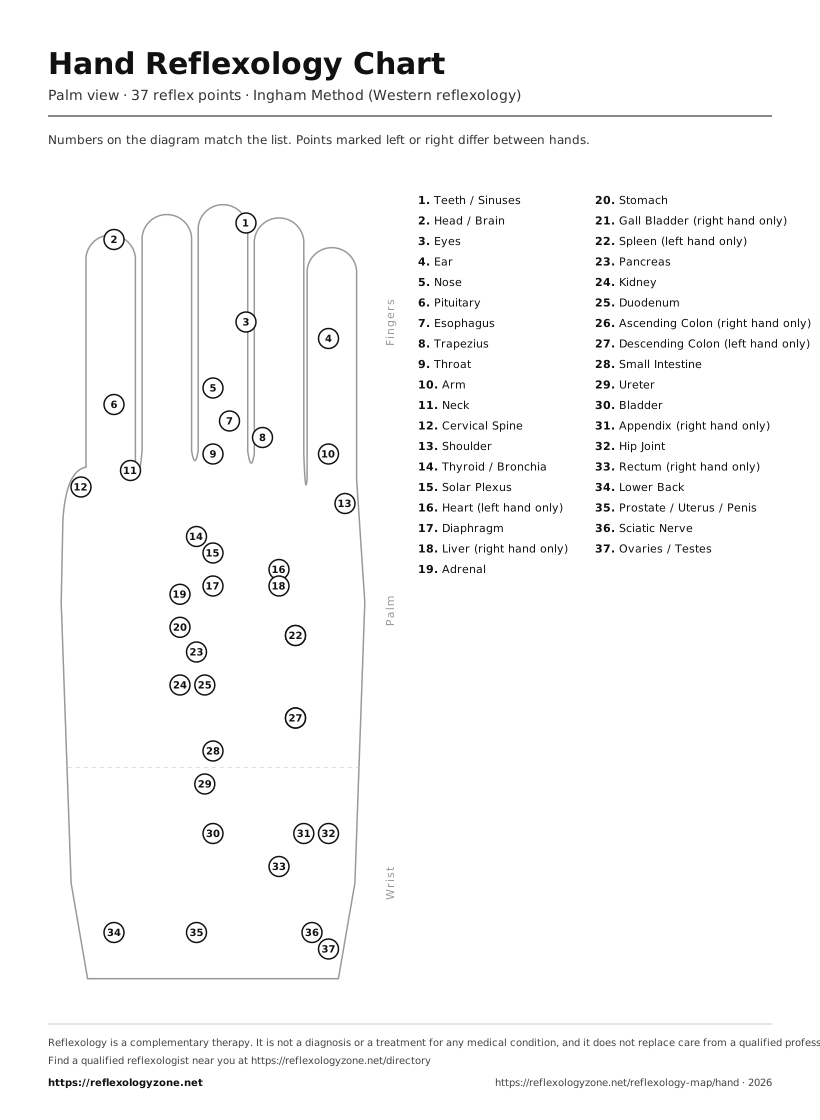
Reflexology is a complementary therapy. The traditional connections shown here are based on reflexology tradition, not medical science. Always consult a qualified healthcare provider for medical concerns.